Before anything else, you are a human being.
There is a version of this work where a young person has to explain themselves before they are allowed in — where what happened to their family becomes a form to fill out, a box to check, something to prove to a stranger.
That is not how we do it. We do not ask them to explain or justify what happened to their family.
We see the differences people carry. We know they are real, and we know they matter. We just refuse to use them to decide who deserves dignity, or opportunity, or a place to stand.
Everything that follows starts there.
Presence.
Getting down to eye level
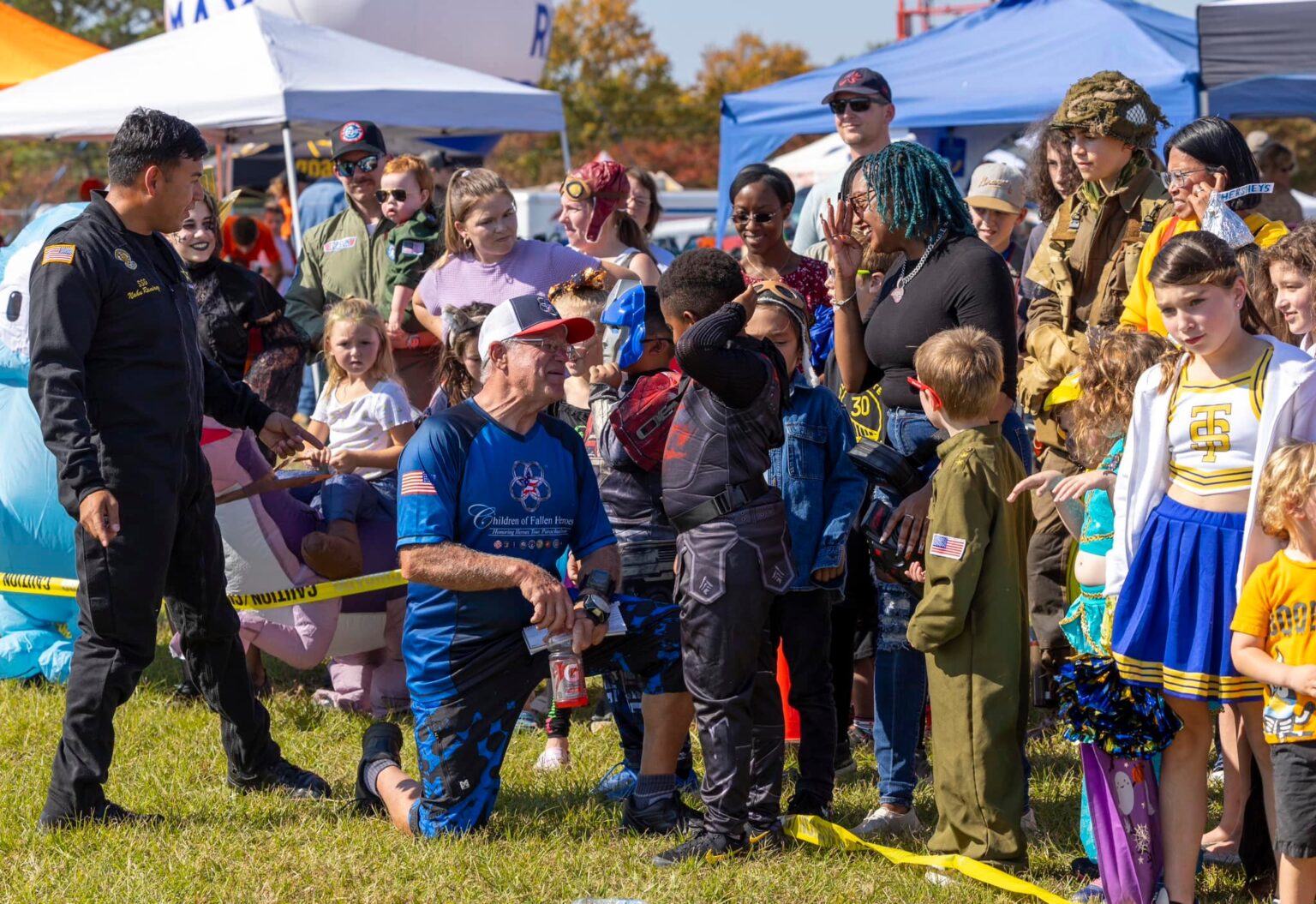
Presence is not a program. It is a grown-up putting a knee in the grass so a kid doesn’t have to look up to be heard.
Most of what matters in this work happens in those small moments — a question answered seriously, a name remembered, an adult who is not in a hurry. Young people can tell the difference between being processed and being paid attention to. They knew the difference long before we showed up.
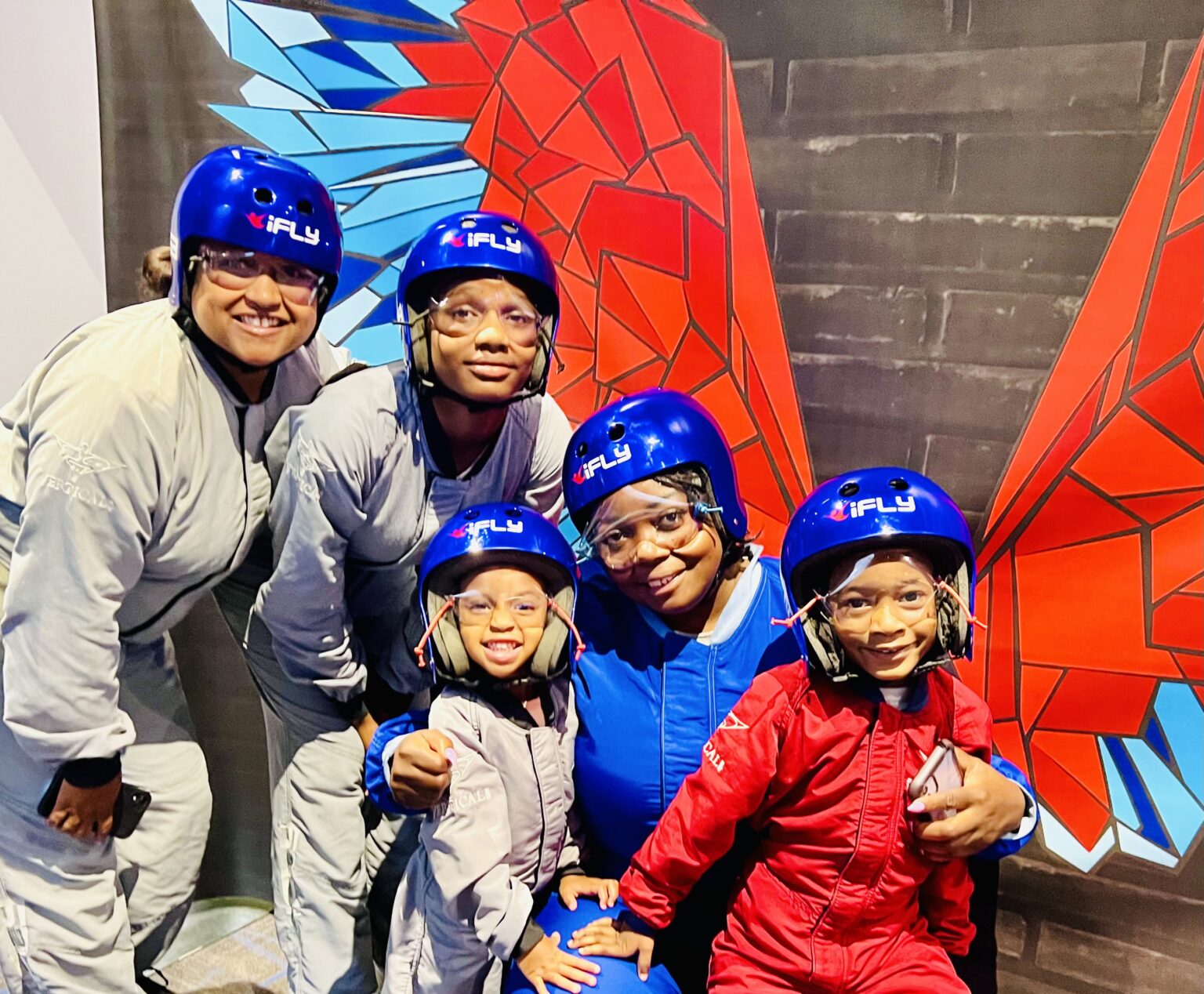
So we show up. In gymnasiums and classrooms, on flight lines and fairgrounds, at the wind tunnel and the hangar door. We stay long enough to be recognized the next time.
Compassion.
Meeting people where the day actually is
Compassion, the way we practice it, is mostly unglamorous. It is noticing that a kid is having a hard morning and adjusting the whole plan around it. It is a parent who is holding a family together on very little sleep, and being handed one thing they do not have to manage alone.
It is not pity, and it is not a program benefit. It is the ordinary decency of treating someone’s hardest year as something we can stand next to rather than something we file.
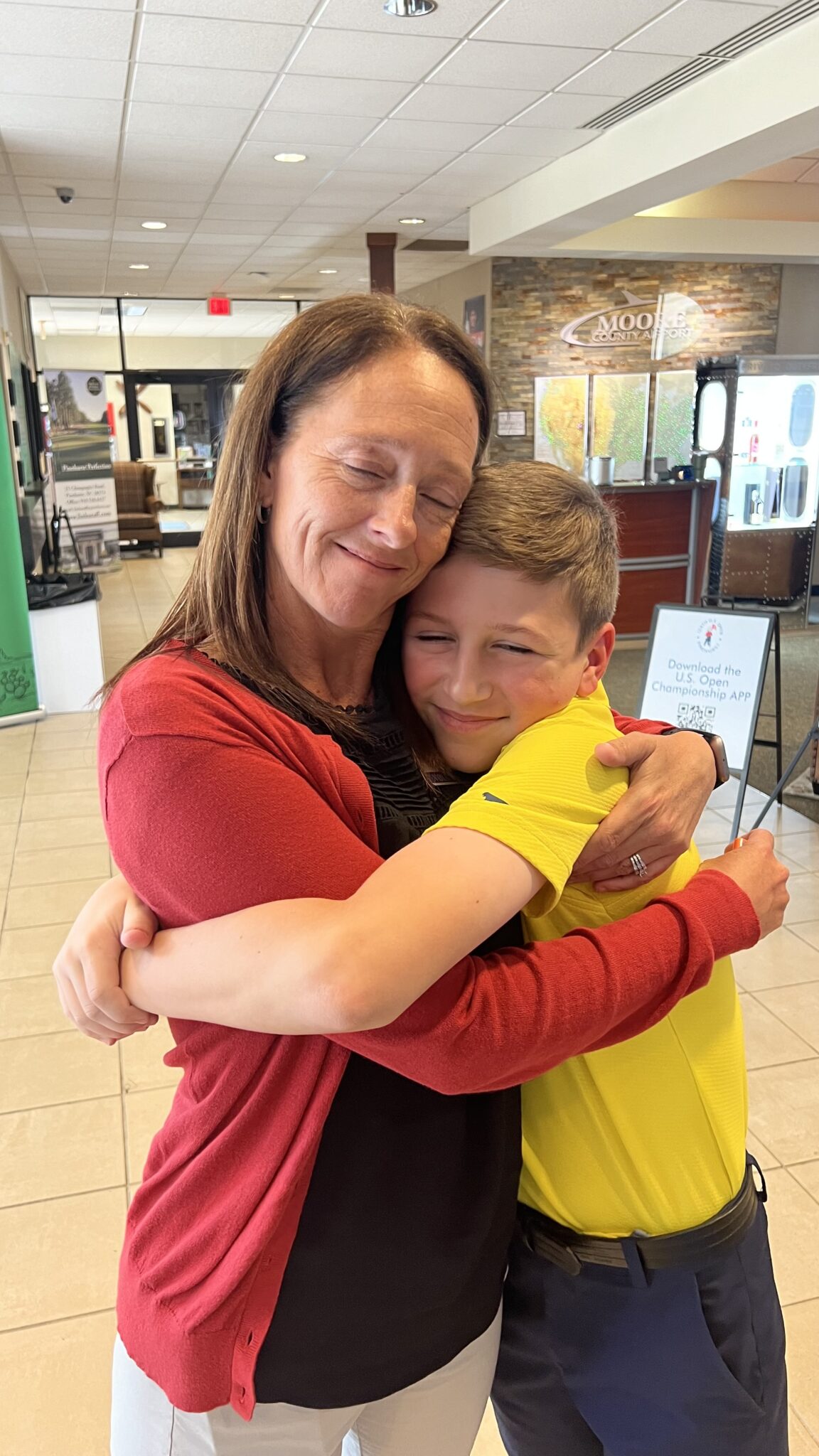
Sometimes it looks like a whole afternoon of activity. Sometimes it looks like standing still in a lobby for as long as somebody needs.
Belonging.
Not a guest, a member
There is a difference between being invited to something and being part of it. A guest is grateful and careful. A member argues about where to eat, takes up space, comes back without being asked twice.
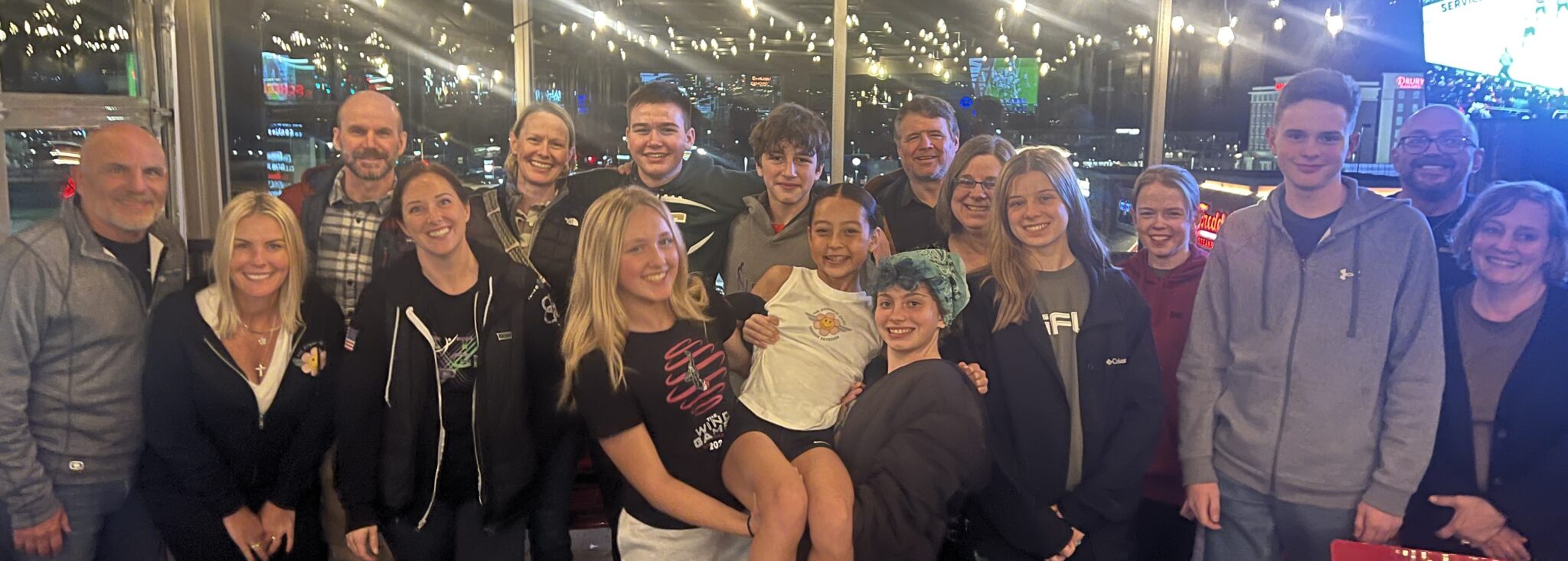
We are after the second one. Families arrive connected to us by the hardest thing that ever happened to them, and they stay connected by everything that comes after — the trips, the meets, the classes, the long drives, the group photo nobody wanted to pose for.
Belonging is what turns a program into people who know each other.
It is the practice of remaining.
Welcoming someone is not an event. It is not a ribbon, a weekend, or a photograph. It is what you do the following month, and the year after that, when the attention has moved on and the family is still living inside the same loss.
Presence. Compassion. Opportunity. Belonging. Not four departments — four things we are trying to keep doing, on purpose, for as long as we are needed.
And it compounds in a direction we did not have to design. A young person who has been welcomed learns how to welcome. We watch it happen constantly: the kid who was nervous in the door two years ago is now the one walking the new kid in, carrying the gear, explaining how it works. That is the whole thing, honestly. That is what we are building.
One humanity. One promise.